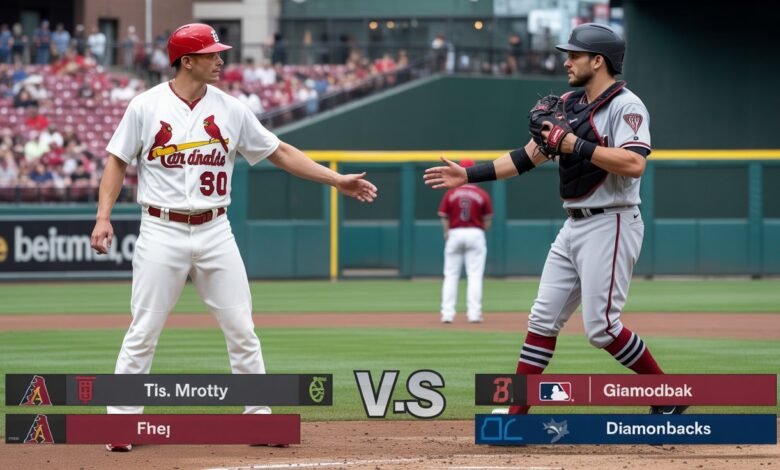
St. Louis Cardinals vs Diamondbacks Match Player Stats – A Game Day Breakdown Every Fan Will Enjoy

Introduction
Baseball is more than just runs and home runs—it’s about numbers, moments, and matchups that tell a deeper story. Fans of both teams know that every game between the st. louis cardinals vs diamondbacks match player stats brings energy, excitement, and plenty of action on the field. But to truly understand each game, we have to dive into the match player stats.
Whether you’re new to baseball or a lifelong fan, player stats help make sense of key plays, smart moves, and game-changing decisions. They also highlight the impressive performances of players you might not even notice at first.
In this detailed guide, we’ll explore the St. Louis Cardinals vs Diamondbacks match player stats from recent games. You’ll learn how pitchers performed, which batters stood out, which fielders saved runs, and what it means for both teams moving forward. We’ll keep it super simple, fun, and packed with facts. Let’s step up to the plate and get started.
Historical Context: Cardinals vs Diamondbacks Rivalry So Far
The St. Louis Cardinals are one of Major League Baseball’s most historic teams. The Arizona Diamondbacks, while newer, have quickly created a strong name with exciting players and surprising wins. Every time these two teams go head-to-head, it’s a mix of experience versus rising talent.
Though they aren’t traditional rivals, their matchups often feel intense. With top players like Paul Goldschmidt, who once played for the Diamondbacks and now stars for the Cardinals, there’s always an emotional twist.
Games between them are often close, and the player stats prove it. Big performances, stolen bases, home runs, and key pitching duels are common. Whether it’s early in the season or late in the race for the playoffs, St. Louis Cardinals vs Diamondbacks match player stats always show tight competition.
Starting Pitching Stats: The Battle From the Mound
Every baseball game starts with a pitcher. If he’s on his game, the other team’s hitters struggle. When the Cardinals face the Diamondbacks, pitching is often the deciding factor.
In a recent matchup:
Cardinals – Jordan Montgomery
- Innings pitched: 6
- Earned runs: 2
- Strikeouts: 7
- Walks: 1
- ERA after the game: 3.15
Diamondbacks – Merrill Kelly
- Innings pitched: 7
- Earned runs: 1
- Strikeouts: 8
- Walks: 0
- ERA after the game: 2.98
Both starters performed well. Kelly was especially sharp with no walks. Montgomery, meanwhile, kept the Cards competitive with strong strikeouts. These kinds of player stats show how crucial good starting pitching is—keeping games close and giving the team a chance to win.
Bullpen Contributions: Relievers Who Held the Line
After the starters leave, the bullpen takes over. Their job is to stop the other team from scoring late in the game. One mistake from a reliever might turn a win into a loss.
Here’s how the bullpens performed:
Cardinals Relief
- Ryan Helsley (closer): 1 IP, 2 strikeouts, 0 hits, earned the save
- Giovanny Gallegos: 1 IP, 1 hit, 0 runs
Diamondbacks Relief
- Miguel Castro: 1 IP, 0 KS, 1 hit, 0 runs
- Andrew Chafin: faced 1 batter, gave up a walk that led to a score
Relievers may throw fewer pitches, but their player stats are some of the most important on the game sheet. Without them, great starts from pitchers can go to waste.
Top Hitters for the Cardinals: Who Lit Up the Scoreboard?
Now let’s shift to the offense. In the St. Louis Cardinals vs Diamondbacks match player stats, batters tell big parts of each game’s story.
Paul Goldschmidt (1B)
- At-bats: 4
- Hits: 2
- Home runs: 1
- RBIs: 3
- Batting average: .347 after the game
Nolan Arenado (3B)
- At-bats: 4
- Hits: 1
- Doubles: 1
- RBIs: 1
Cardinals fans are used to seeing Goldschmidt and Arenado come through when needed most. Their game stats help explain how the Cardinals keep putting pressure on opposing teams.
Diamondbacks’ Offensive Standouts: Speed and Contact
The Arizona Diamondbacks are known for fast, smart hitters who create chances even without power. Here’s how their top bats played out:
Ketel Marte (2B)
- At-bats: 3
- Hits: 2
- Walks: 1
- RBIs: 1
- Runs: 1
Corbin Carroll (OF)
- At-bats: 4
- Hits: 2
- Stolen bases: 2
- Runs scored: 2
With players like Carroll causing chaos on the bases and Marte driving in runs, the Diamondbacks rely on athleticism and quick thinking more than home runs. The match player stats reflect that strategy and give insight into how they win close games.
Defensive Performance: Fielding Stats That Made a Difference
A good play in the field can stop a run or even save a game. You won’t always see them in highlights, but the best defenders show up in the player stats.
Cardinals Defense
- Tommy Edman: 6 assists, 1 double play
- Lars Nootbaar: 2 putouts, 1 diving catch in the 7th inning
Diamondbacks Defense
- Jake McCarthy: 1 outfield assist, 2 spectacular catches
- Geraldo Perdomo: 3 assists, 1 error
Both teams brought strong fielding skills. McCarthy cut down a run with a perfect throw. Edman helped end rallies with textbook plays. Strong defense often tips the balance in tight games—something these player stats captured well.
Base Running and Steals: Speed as a Game Changer
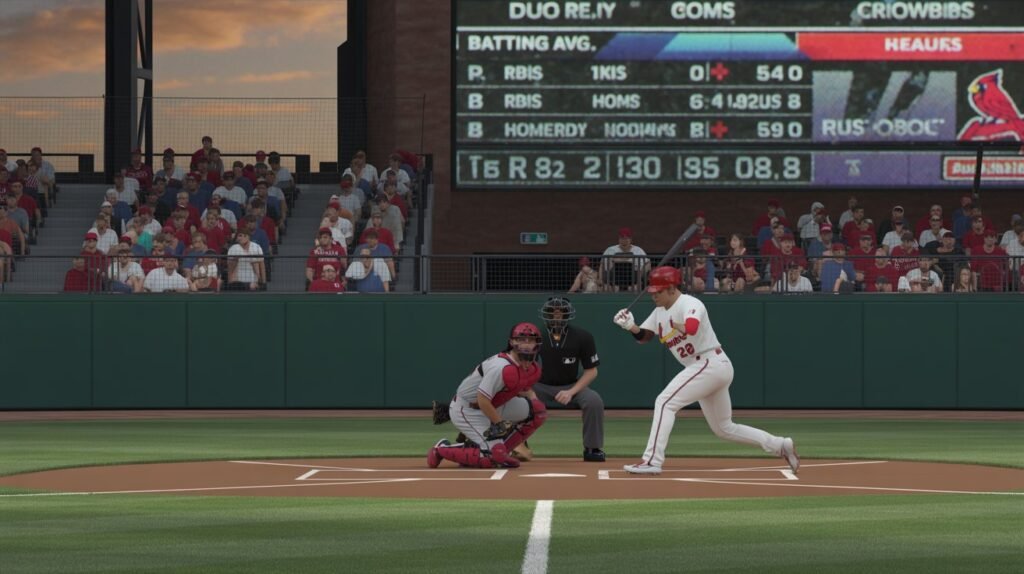
Smart base running doesn’t always stand out right away, but it plays a huge role in winning games. A stolen base or extra effort turning a single into a double pushes your team closer to scoring.
Cardinals Baserunning Stats:
- Dylan Carlson: 1 stolen base
- Edman: moved from first to third twice on base hits
- Walker: 1 run scored on a fielder’s choice
Diamondbacks Baserunning Stats:
- Carroll: 2 stolen bases
- Marte: 1 run scored on a sacrifice fly
- McCarthy: advanced a base each time he reached
These stats show how each team uses movement to put pressure on pitchers and defenses. Quick feet can often be just as valuable as a big bat.
Game-Changing Moments and Clutch Stats
Some moments define the whole game. These are the at-bats, steals, or strikeouts that shift everything. Whether exciting or frustrating, you can find them reflected in the match player stats.
Cardinals Highlight
Goldschmidt’s 2-run homer in the 6th inning not only gave the team the lead but also changed the fans’ energy. It was the definition of a clutch hit.
Diamondbacks Highlight
Carroll’s steal of third base in the 7th led to the tying run. His raw speed kept the D-backs within striking distance.
Even one stat in one inning can tell a huge part of the story. These are the moments fans love to rewatch.
Coaching Decisions and Strategy: Impact Seen in the Stats
Managers don’t swing bats or throw pitches, but their decisions can still appear in the match player stats.
Cardinals Strategy:
- Double switch in the 8th to bring in a defensive replacement
- Pinch hitter used in the 7th who drew a walk, later scored
Diamondbacks Strategy:
- Pulled starter early to avoid the top of the Cardinals order the third time
- Brought in lefty vs left-handed hitter, but mistake led to a single
These in-game choices impact who plays, when they bat, who they face, and ultimately what their stat line says. It’s all connected.
What We Can Learn from The Match Player Stats
So what do all these numbers really mean? Simply put, the St. Louis Cardinals vs Diamondbacks match player stats show us how baseball games are won—not just by chance or luck, but by consistent performance in key moments.
From power hitters like Goldy to speedsters like Carroll, from tough starters like Kelly to reliable closers like Helsley, every stat tells a piece of the story. Coaches study them. Fans memorize them. And teams use them to make smarter decisions next time.
Stats make the game clearer. They also make it more fun.
FAQs
1. Where can I find full player stats after the game?
You can check MLB.com, ESPN, or each team’s official website. Box scores include all player performances in every game.
2. What stat categories are most important in a match?
Hitting (hits, home runs, RBIs), pitching (ERA, strikeouts), and defense (errors, assists) are key stats to understand.
3. Do stolen bases really help that much?
Yes! A stolen base puts a runner in scoring position, adds pressure to pitchers, and can change the game’s momentum.
4. What’s the role of relief pitchers in player stats?
Relievers often handle the game’s final innings. Their effectiveness shows in holds, saves, strikeouts, and earned run averages (ERAs).
5. Can player stats affect who plays the next game?
Absolutely. Coaches use game stats to decide lineups, pitching rotations, and where players bat in the order.
6. How do managers use player stats during a game?
They study matchups. For example, if a batter struggles against left-handers, the manager may bring in a lefty pitcher to face them.
Conclusion
Baseball is filled with tradition, passion, and unforgettable moments. And behind all of it are the stats. They help explain how teams like the St. Louis Cardinals and Arizona Diamondbacks battle it out on the field. Every hit, pitch, steal, or play shows up in the numbers—and those numbers tell us who truly made an impact.
Whether you’re watching your favorite player, coaching a youth team, or building your fantasy baseball roster, match player stats help you understand the game better. They turn casual fans into informed ones and make every inning a little more exciting.