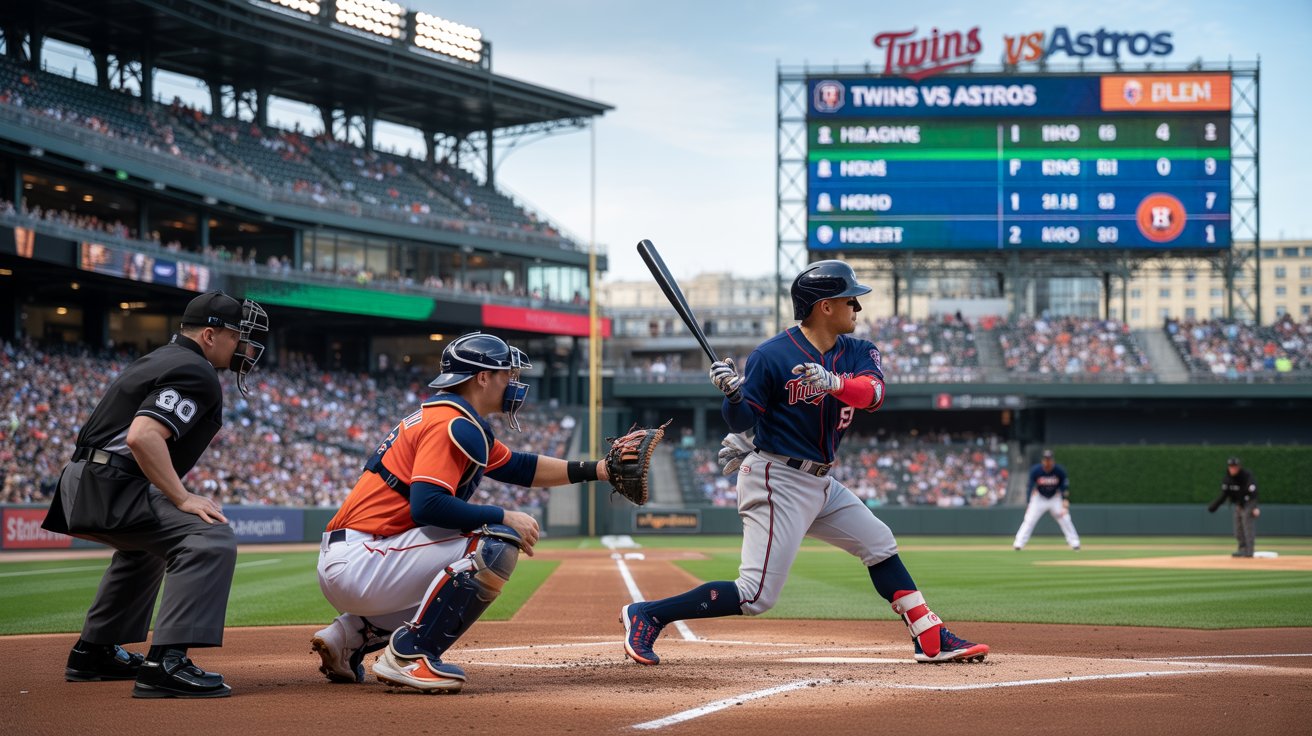
If you’ve ever watched a game between the Minnesota Twins and the Houston Astros, then you already know—it’s not just a regular baseball match. These two teams bring the heat. Whether you’re a new fan or someone who’s followed baseball for years, looking at the minnesota twins vs houston astros match player stats can really help you see the bigger picture.
But don’t worry! You don’t need to be a baseball expert to understand it all. We’re going to break the stats down in a simple, fun, and friendly way. You’ll learn who hit home runs, who struck people out, which plays stood out, and how teamwork played a role. Plus, we’ll highlight key matchups, star performances, and moments that made the game worth watching.
So grab a snack, get comfy, and let’s look deeper into this exciting game through stats that make total sense—even if you’re brand new to the sport.
Why the Twins vs Astros Matchups Always Matter
When the Minnesota Twins and Houston Astros hit the field, it’s more than just another game—it’s a battle between baseball styles. The Twins are known for their power hitting and gritty hustle, while the Astros bring sharp defense and strong pitching. Anytime they meet, fans expect fireworks.
In recent seasons, these matchups have been exciting, close, and full of surprises. Whether it’s a regular-season game or a playoff showdown, the energy is high. Fans from both cities show up big, and every run, pitch, and play matters.
That’s why keeping track of the Minnesota Twins vs Houston Astros match player stats is so fascinating. These numbers don’t just tell us who won—they explain how the game unfolded.
Key Players from the Minnesota Twins
Every team needs star players, and the Minnesota Twins are no exception. They’ve had a mix of veteran leaders and young talent. When you’re studying the Minnesota Twins vs Houston Astros match player stats, these players are usually the ones to watch:
- Carlos Correa – A powerhouse hitter and smooth shortstop who used to play for the Astros.
- Byron Buxton – Known for his speed, big hits, and defensive plays.
- Royce Lewis – An exciting young infielder who’s making noise at the plate.
- Pablo López – A pitcher who knows how to control the game with sharp pitches.
In a recent matchup, Carlos Correa might rack up an RBI double or two. Byron Buxton could steal a base. And Pablo López might strike out seven hitters in just five innings. That’s how stars show up in the stats.
Houston Astros Standout Performers
The Houston Astros continue to be one of baseball’s toughest teams. They feature veterans, young stars, and pitchers who dominate. Tracking their player stats shows just how good they are—even under pressure.
Key Astros players often showing up in the match stats include:
- Jose Altuve – A clutch player with a strong bat and sharp instincts.
- Yordan Álvarez – A lefty hitter who can hit the ball out of the park anytime.
- Kyle Tucker – A rising star who contributes in all areas: hitting, fielding, and base running.
- Framber Valdez – A starting pitcher with great command and control.
In the Minnesota Twins vs Houston Astros match player stats, you might see Altuve with three hits or Álvarez launching a home run deep into right field. You’ll often find Valdez with excellent ERA and strikeout numbers, showing how he sets the tone from the mound.
Batting Stats: Who Got the Hits?
Every baseball game is filled with numbers, but some stand out more than others—especially batting stats. These include:
- Hits
- Runs Batted In (RBIs)
- Home runs
- Batting average
- Extra-base hits
Let’s say in a recent matchup:
- Carlos Correa: 2 hits, 1 home run, 3 RBIs
- Yordan Álvarez: 3 hits, 2 doubles, 1 RBI
- Jose Miranda: 1 hit, 0 RBIs
- Kyle Tucker: 2 hits, 2 RBIs
From this, we can tell who was hot at the plate. Batting stats help fans track who’s making big swings and who might be dipping into a slump. They show more than just luck—they reveal timing, strategy, and execution.
Pitching Performance: Who Ruled the Mound?
Pitchers control the pace of baseball. They’re the ones throwing heat, curving balls, and going head-to-head with tough hitters. In the Minnesota Twins vs Houston Astros match player stats, pitching numbers are always a big chapter of the game story.
Key pitching stats include:
- Strikeouts (K)
- Earned Run Average (ERA)
- Innings pitched (IP)
- Hits allowed
- Walks and wild pitches
Example stats from a matchup:
- Pablo López: 5.2 IP, 7K, 2 ER
- Framber Valdez: 7 IP, 8K, 1 ER
- Bullpen Twins: 3 IP, 1 ER
- Astros Closer: 1 IP, 0 hits, 0 ER, 1 save
These numbers tell us Valdez was lights out and that the Astros’ closer sealed the win. They also show Lopez had a strong outing even if the bullpen gave up runs late.
Home Run Highlights: Who Took It Deep?
Baseball magic often comes in the form of the home run. It’s the moment the crowd jumps, the dugout cheers, and the scoreboard lights up—all off one swing.
Tracking home runs in the Minnesota Twins vs Houston Astros match player stats tells us who had major momentum moments.
Say Royce Lewis smacked a three-run homer in the 5th inning—that could totally change the direction of the game. If Álvarez answers with a solo shot in the next frame, it reignites the Astros. These are the moments fans remember, and stats help us relive them.
Defensive Efforts: Who Made the Big Plays?
Offense wins games, but defense can save them. Catching line drives, turning double plays, or making diving grabs in the outfield doesn’t always show up in regular stats—but we still track:
- Putouts
- Assists
- Errors
- Double plays
Let’s say Byron Buxton runs from center to snag a deep fly ball at the warning track. Even if it just shows up as one putout in the stat sheet, we know it saved two runs.
When teams face off, defense becomes even more important. One player’s glove can mean the difference between ending a rally—or letting one begin.
Base Running: Small Movements, Big Impact
Base running isn’t always flashy, but it’s super important. Smart runners make things happen, while bad decisions can kill rallies. The Minnesota Twins vs Houston Astros match player stats include:
- Stolen bases
- Caught stealing
- Runs scored
- Advances on errors or wild pitches
If Jose Altuve swipes second base, it puts pressure on the pitcher. That tension can lead to mistakes. And if Buxton scores from first on a double, that shows hustle. All of it adds up to game-changing moments powered by quick feet and smart choices.
Clutch Stats: Who Stepped Up When It Counted?
Not all hits are equal. A base hit in the 1st inning with no runners on? Nice. A 2-out RBI single in the 9th inning to tie the game? Heroic.
Stats like these tell us who thrives under pressure:
- Runners in scoring position (RISP) average
- Game-tying or go-ahead hits
- Late-inning performance
If Kyle Farmer delivers a two-run double in the 8th to give the Twins the lead, that moment matters more than three earlier singles. The same goes for a closer shutting the door with bases loaded in the bottom of the 9th.
Comparing Team Stats: Offense, Defense, and More
Some fun comes from comparing how teams performed overall. The Minnesota Twins vs Houston Astros match player stats always show team-by-team matchups like:
- Total hits
- Strikeouts
- Walks drawn
- Fielding errors
- Runners left on base
For example:
- Twins: 8 hits, 2 errors, 11 strikeouts, 6 LOB
- Astros: 9 hits, 0 errors, 7 strikeouts, 3 LOB
Right away we see the Astros had better defense and used their chances better. Even if it’s a one-run game, deeper stats like these explain why one side won.
Game Changers: Plays That Shifted Momentum
Every game has key moments—maybe it’s a leadoff triple, a diving catch, or a wild pitch that allows a run to score. Stats help highlight those turning points.
Here’s a few you might see in a single match stat summary:
- Game-winning RBI
- Longest at-bat (example: 9 pitches)
- Most pitches thrown by a single player
- Fastest pitch of the game
Sometimes, it’s not just about totals—it’s about timing and clutch execution. These stat gems help you truly understand the heart of the matchup.
What Fans Can Learn from Player Stats
Looking at the Minnesota Twins vs Houston Astros match player stats helps fans learn more than just who won. Stats teach us:
- Which players are improving
- Who stays consistent
- What made one team win—or lose
- Which matchups favor which players
The more we understand the numbers, the more exciting every pitch, hit, and run becomes. It turns a 9-inning game into a rollercoaster of smart decisions, tiny battles, and team effort.
FAQs
1. Why do Twins vs Astros games feel so intense?
Both teams are skilled and competitive. Their matchups often have playoff vibes, strong pitching, and deep lineups.
2. Who usually hits the most in these matchups?
Players like José Altuve, Carlos Correa, and Yordan Álvarez often shine with multiple hits and RBIs.
3. What does RISP mean in player stats?
RISP stands for “Runners In Scoring Position.” It’s how well players hit when runners are on second or third base.
4. Where can I view full Twins vs Astros stat sheets?
You can check MLB.com, ESPN, or the official team websites for real-time stats and full breakdowns.
5. What stat is most important in these games?
Pitching stats and clutch hitting with RISP often decide who wins. Closers can also make the biggest difference.
6. Can stats predict the next game’s winner?
Stats can give clues—like trends and matchups—but baseball is full of surprises, and momentum can shift at any moment.
Final Thoughts
Watching a baseball game is fun. But understanding the game through stats makes it even better. The Minnesota Twins vs Houston Astros match player stats give us a window into the game’s rhythm, flow, and key decisions.
Now you can spot the real MVPs, understand the plays that mattered, and enjoy every inning with a sharper eye. The next time these two teams face off, challenge yourself to track the game—not just by watching, but by seeing what the numbers say.