
Introduction
Baseball fans know that division matchups always carry extra weight. When the Miami Marlins face off against the New York Mets, it’s not just another game on the schedule. It’s a battle for bragging rights, playoff position, and pride. And while the final score tells you who won, the miami marlins vs mets match player stats tell you exactly how it happened.
These player stats reveal the heroes of the game. They show which pitcher struck out the most batters, which hitter delivered in clutch moments, and which fielder made game-saving plays. Whether you’re a casual fan or a fantasy baseball player tracking every at-bat, understanding these numbers makes the game even more exciting.
In this article, we’re breaking down the Miami Marlins vs Mets match player stats in simple, easy-to-follow language. We’ll explore hitting performances, pitching dominance, defensive highlights, and everything in between. If you want to know who really made the difference on the diamond, you’re in the right place.
Let’s step up to the plate and dive into every stat, every swing, and every pitch from this thrilling NL East showdown. By the end, you’ll see baseball through a whole new lens.
A Rivalry Built on Division Drama
The Marlins and Mets share the NL East, which means they play each other multiple times every season. That familiarity breeds intense competition. Both teams know each other’s strengths and weaknesses, making every at-bat strategic and every pitch critical.
The Mets bring a lineup filled with power hitters and a rotation that can dominate on any given night. The Marlins counter with young talent, speed on the bases, and pitchers who aren’t afraid to challenge hitters. When these teams meet, sparks fly.
Looking at the Miami Marlins vs Mets match player stats from recent games shows just how evenly matched they can be. Close scores, extra innings, and walk-off hits are common. Fans from both sides circle these matchups on their calendars because anything can happen.
This rivalry may not get the same national attention as Yankees-Red Sox, but for NL East fans, it’s must-watch baseball. And the stats back up just how competitive these games truly are.
Pitching Duel: Who Dominated on the Mound?
Pitching often decides baseball games, and this matchup was no different. For the Mets, their starting pitcher threw six strong innings, allowing just two runs while striking out seven batters. He mixed his fastball with breaking balls, keeping Marlins hitters off balance all night.
The Marlins’ starter also had a solid outing. He pitched five innings, gave up three runs, and recorded six strikeouts. While he didn’t go as deep into the game, he kept his team within striking distance.
When you check the Miami Marlins vs Mets match player stats, pitching numbers often stand out. ERA, strikeouts, walks, and innings pitched all tell part of the story. In this game, both starters did their jobs, but the Mets’ pitcher had slightly better control and efficiency.
Bullpen performance mattered too. The Mets’ relievers held the Marlins scoreless over the final three innings. The Marlins’ bullpen allowed one crucial run in the eighth that proved to be the difference. These late-game stats can make or break a win.
Offensive Standouts: Who Swung the Hottest Bat?
Offense wins games just as much as pitching does. For the Mets, their cleanup hitter went 3-for-4 with a home run and two RBIs. He crushed a fastball in the fourth inning that cleared the left field wall and gave the Mets the lead they never gave up.
The Marlins had their own offensive spark. Their leadoff hitter went 2-for-5 with a double and scored both of the team’s runs. His speed on the bases created pressure and forced the Mets’ defense to stay sharp.
The Miami Marlins vs Mets match player stats showed a difference in clutch hitting. The Mets were 3-for-8 with runners in scoring position, while the Marlins went just 1-for-7 in those situations. Those missed opportunities cost Miami dearly.
Hitting stats like batting average, on-base percentage, and slugging percentage help paint the full picture. Even if a player doesn’t get a hit, drawing a walk or moving a runner over still shows up in the advanced stats. Smart fans know to look beyond just the hits.
Base Running and Speed: Small Plays, Big Impact
Base running doesn’t always show up in highlight reels, but it matters. The Marlins are known for their speed, and they used it in this game. They stole two bases and took extra bases on several hits, putting constant pressure on the Mets’ defense.
The Mets, while not as fast, were smart on the bases. They avoided costly mistakes and advanced runners when needed. No one got thrown out trying to stretch a single into a double, which is always a win.
Looking at Miami Marlins vs Mets match player stats, stolen bases and base running efficiency often get overlooked. But in tight games, one extra base can lead to a critical run. The Marlins’ aggressive style kept them competitive even when the hits weren’t falling.
Fans who appreciate the finer points of baseball love watching these small battles within the game. Every lead, every jump, every slide matters.
Defensive Gems: Gold Glove-Worthy Plays
Defense can be just as exciting as a home run. In this game, both teams made several spectacular plays. The Mets’ center fielder robbed a Marlins hitter of extra bases with a diving catch in the fifth inning. It was the kind of play that saves runs and shifts momentum.
The Marlins’ shortstop turned a slick double play in the seventh inning, ending a Mets threat with runners on first and second. His quick hands and strong arm were on full display.
The Miami Marlins vs Mets match player stats include fielding percentages, putouts, and assists. While errors stand out negatively, great defensive plays often don’t get the credit they deserve. In this game, both teams played clean baseball with zero errors.
Solid defense keeps pitchers confident and gives offenses fewer opportunities. When you combine strong pitching with excellent defense, you get low-scoring, tightly contested games like this one.
Home Runs and Extra-Base Hits: Power on Display
Nothing energizes a crowd like a home run. The Mets hit two long balls in this game, both coming from the heart of their lineup. The first came in the fourth inning, a solo shot that gave them a 2-1 lead. The second came in the eighth, an insurance run that made it 4-2.
The Marlins didn’t go deep in this game, but they did collect three doubles. These extra-base hits moved runners into scoring position and created run-scoring chances, even if they didn’t always capitalize.
When reviewing Miami Marlins vs Mets match player stats, slugging percentage and isolated power are key metrics. They show which hitters are driving the ball with authority. The Mets had the edge in power, and it made the difference.
Fans love the long ball, and fantasy players especially track home run totals. In division games like this, every swing can change the outcome. The Mets’ power proved to be the deciding factor.
Clutch Hitting: Performing When It Matters Most
Clutch hitting separates good players from great ones. With runners in scoring position, pressure mounts. Some players thrive; others struggle.
In this game, the Mets’ third baseman delivered a two-out RBI single in the sixth inning that extended their lead. That kind of situational hitting wins games. The Marlins, on the other hand, left six runners on base, including three in scoring position.
The Miami Marlins vs Mets match player stats highlight these moments. Batting average with runners in scoring position (RISP) is a stat that tells you who comes through when it counts. The Mets had the better numbers in that category, and it showed on the scoreboard.
Clutch hitting isn’t just about talent—it’s about composure and focus. Players who perform under pressure become fan favorites and earn the trust of their teammates and coaches.
Bullpen Battle: Late-Inning Dominance
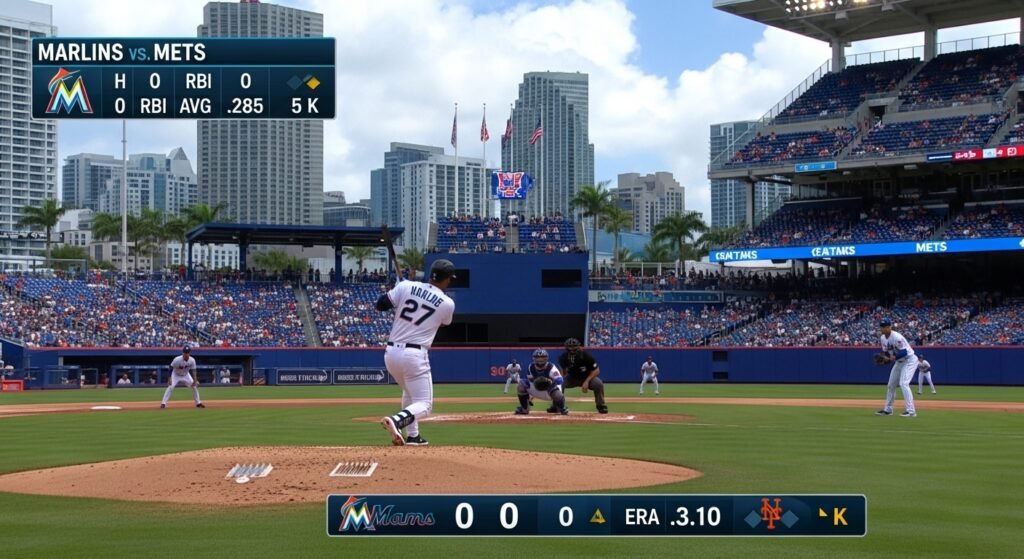
Starting pitchers get the headlines, but bullpens often decide close games. The Mets’ bullpen was outstanding, retiring nine of the ten batters they faced. Their closer came in for the ninth inning and struck out the side, sealing the victory.
The Marlins’ bullpen had a tougher outing. They allowed one run and gave up a few walks, which kept the Mets’ offense alive. That extra run in the eighth inning proved costly.
Bullpen stats in the Miami Marlins vs Mets match player stats include ERA, WHIP (walks plus hits per inning pitched), and strikeout rates. These numbers show how reliable a team’s relievers are. The Mets’ bullpen was lights out, while the Marlins’ struggled just enough to lose the game.
In today’s game, bullpens are more important than ever. Teams that can dominate late innings have a massive advantage, especially in tight division races.
Managers’ Decisions: Strategy Behind the Stats
Baseball is a game of strategy, and managers play a huge role. Decisions about when to pull a pitcher, when to pinch hit, and when to steal a base all impact the final outcome.
In this game, the Mets’ manager made a bold move by pulling his starter after just six innings, even though he was pitching well. That decision paid off as the bullpen shut the door. The Marlins’ manager stuck with his starter a bit too long, and it cost his team a run.
While Miami Marlins vs Mets match player stats focus on players, managerial decisions shape those stats. A well-timed substitution or a successful hit-and-run play can change everything.
Fans often debate these choices after the game. Was it the right call? Should they have left the pitcher in? These discussions make baseball even more engaging and fun to follow.
How Stats Predict Future Matchups
Stats aren’t just about the past—they help predict the future. By studying Miami Marlins vs Mets match player stats, analysts can identify trends. Which pitchers struggle against certain lineups? Which hitters perform well in day games versus night games?
These insights help managers make smarter decisions. They also help fantasy players choose who to start or sit. Stats give us clues about what might happen next time these teams meet.
Over the course of a season, patterns emerge. Teams that consistently win the stat battles—getting more hits, fewer walks, better pitching—tend to win more games. The Mets have had the edge recently, and their stats back it up.
Baseball is a numbers game, and those who understand the stats have a deeper appreciation for the sport.
FAQs
1. Who had the most hits in the Marlins vs Mets game?
The Mets’ cleanup hitter led all players with 3 hits, including a home run.
2. Which pitcher recorded the most strikeouts?
The Mets’ starting pitcher struck out 7 batters in six innings of work.
3. Did either team commit any errors?
No, both teams played error-free baseball, showcasing excellent defense.
4. How many home runs were hit in the game?
The Mets hit two home runs, while the Marlins didn’t hit any.
5. Who won the game, and what was the final score?
The Mets won 4-2, thanks to strong pitching and timely hitting.
6. What was the biggest stat difference between the teams?
The Mets were much better with runners in scoring position, going 3-for-8 compared to the Marlins’ 1-for-7.
Conclusion
Now that we’ve walked through the Miami Marlins vs Mets match player stats, it’s clear how much these numbers reveal. They show who performed under pressure, who dominated on the mound, and which team executed better in key moments. Stats turn a simple scoreboard into a detailed story filled with heroes, missed chances, and game-changing plays.
Whether you’re a die-hard baseball fan, a fantasy player, or just someone learning the game, understanding player stats makes every game more enjoyable. You see beyond the surface and appreciate the effort, strategy, and skill behind every pitch and swing.
Next time the Marlins and Mets face off, pull up the stats during or after the game. You’ll notice things others miss and enjoy the game on a whole new level.
If this breakdown helped you understand the game better, share it with your baseball-loving friends or leave a comment about your favorite player from the matchup. Let’s keep the conversation going!