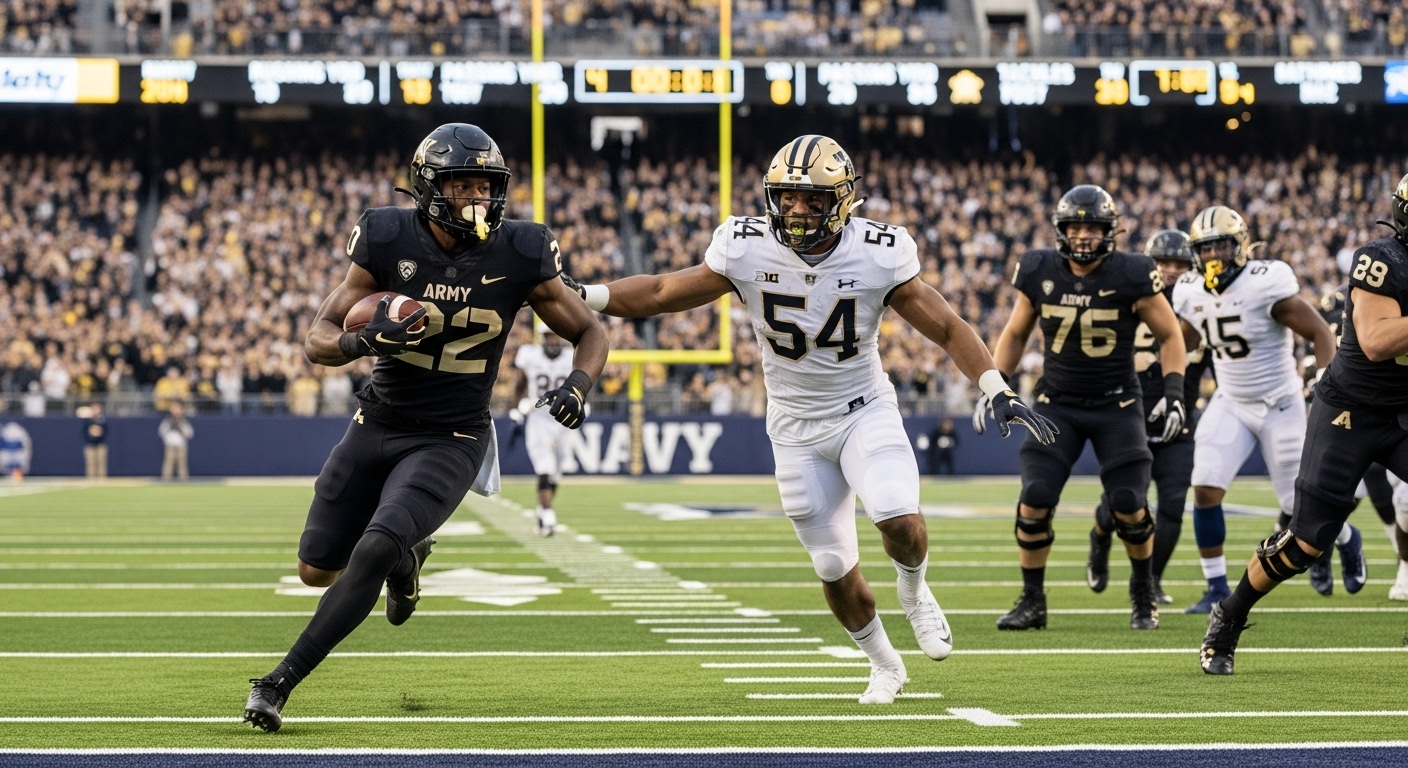
Some football games mean more than just wins and losses. When Army faces Navy on the gridiron, America witnesses something truly special. This isn’t just another college football rivalry—it’s a tradition that represents honor, sacrifice, and patriotism. The players aren’t just student-athletes; they’re future military officers serving our country. Every tackle, every touchdown, and every play carries deeper meaning beyond the scoreboard.
Understanding the army football vs navy midshipmen football match player stats helps us appreciate this historic matchup on multiple levels. Statistics reveal which cadets and midshipmen dominated on the field while preparing for military service. Numbers show us rushing yards gained, tackles made, and leadership displayed under pressure. Whether you’re tracking quarterback performances or defensive stands, stats tell the complete story of America’s Game.
In this comprehensive guide, we’ll explore every important aspect of this legendary rivalry that dates back to 1890. We’ll break down offensive performances, defensive excellence, special teams heroics, and coaching decisions that shaped outcomes. Whether you support the Black Knights of West Point or the Midshipmen of Annapolis, these insights will deepen your appreciation. Get ready to discover which players became heroes and which statistics mattered most in this game unlike any other. Let’s dive into the numbers that make this rivalry truly special!
Latest Army-Navy Game Overview
The most recent Army-Navy Game delivered everything fans expected from America’s greatest football rivalry. The army football vs navy midshipmen football match player stats from this contest revealed a hard-fought battle with both teams executing their triple-option offenses. Fans witnessed bone-crushing tackles, disciplined execution, and the kind of fundamental football that makes this game special.
The scoreboard reflected the competitive nature of this historic rivalry, with neither team pulling away until late in the contest. Both academies demonstrated the physical brand of football that defines their programs and military traditions. The atmosphere at the neutral-site stadium was absolutely electric, with the Brigade of Midshipmen and Corps of Cadets creating an unforgettable environment.
What made this particular matchup memorable was the intensity both teams brought from opening kickoff through the final seconds. Army showcased their trademark power running game that has defined Black Knights football under their current leadership. Meanwhile, Navy countered with their own version of the triple-option, featuring speed and deception that challenged Army’s defense constantly.
From the march-on of both student bodies to the singing of alma maters after the game, this matchup transcended sports. Both teams executed their game plans while making critical adjustments as situations evolved throughout four quarters. The coaching staffs demonstrated strategic brilliance, preparing their players for this game all season long.
The final score determined bragging rights for an entire year while affecting the Commander-in-Chief’s Trophy standings. This game reminded everyone why the Army-Navy rivalry holds a special place in American culture, representing values beyond just athletic competition and scoreboard results.
Army Black Knights Offensive Standouts
The Black Knights’ offense featured several players who delivered outstanding performances in this crucial rivalry game. Their quarterback showed tremendous poise operating the triple-option offense that requires split-second decision-making on every play. His ability to read defenses and make correct pitch decisions kept Navy’s defenders constantly guessing throughout the contest.
The army football vs navy midshipmen football match player stats highlighted Army’s fullback who punished Navy’s defensive front all afternoon with physical running. His powerful style, excellent vision, and balance made him incredibly difficult to bring down with arm tackles. He consistently gained yards after contact, moving the chains and controlling the clock effectively for his team.
Another Black Knights contributor excelled as a slotback in the option attack, taking pitches and turning corners for explosive gains. His speed in space created problems for Navy’s pursuit angles and containment responsibilities. Army’s offensive line deserves tremendous credit for creating running lanes and executing option blocking techniques against Navy’s aggressive defensive scheme.
The offensive strategy emphasized physical, downhill running that wore down Navy’s defense as the game progressed into later quarters. This approach controlled time of possession, keeping Army’s defense fresh while exhausting their opponents on both sides of the ball. The Black Knights’ commitment to establishing the run opened up occasional play-action passing opportunities that kept drives alive.
Army’s offensive execution in short-yardage situations proved crucial, converting third downs and scoring touchdowns in the red zone efficiently. Their ability to sustain long drives demoralized Navy’s defense while building confidence and momentum with each successful series throughout the game.
Navy Midshipmen Top Performers
Navy’s offense brought their own version of the triple-option that challenged Army’s defense throughout the entire contest. Their quarterback displayed exceptional decision-making, executing the mesh point perfectly while keeping or pitching based on defensive reactions. His leadership and composure under pressure embodied the Naval Academy values their program represents proudly.
The Midshipmen’s featured fullback showcased the toughness and determination that makes Navy football special every season. The army football vs navy midshipmen football match player stats revealed his impressive rushing totals despite facing Army’s stout defensive front consistently. His ability to hit holes quickly and fall forward for extra yardage kept drives moving and the clock running.
Navy’s slotbacks featured multiple weapons who provided speed on the perimeter that stretched Army’s defense horizontally. Their top option back made several big plays in space, showing acceleration and vision that created explosive gains. These reliable ball carriers gave their quarterback confidence to make quick decisions at the mesh point on every snap.
The Midshipmen’s offensive line battled Army’s defensive front courageously, creating movement at the point of attack for their running game. Their physicality and technique matched Army’s intensity, refusing to be dominated at the line of scrimmage where games get won. Navy’s ability to execute in critical third-down situations kept drives alive and points on the scoreboard.
The offensive game plan emphasized precision execution of the triple-option fundamentals that Navy has perfected over decades. This strategic approach kept Army’s defense honest, creating opportunities for big plays when execution aligned perfectly with opponent mistakes and defensive overcommitment to specific responsibilities.
Triple-Option Offensive Statistics
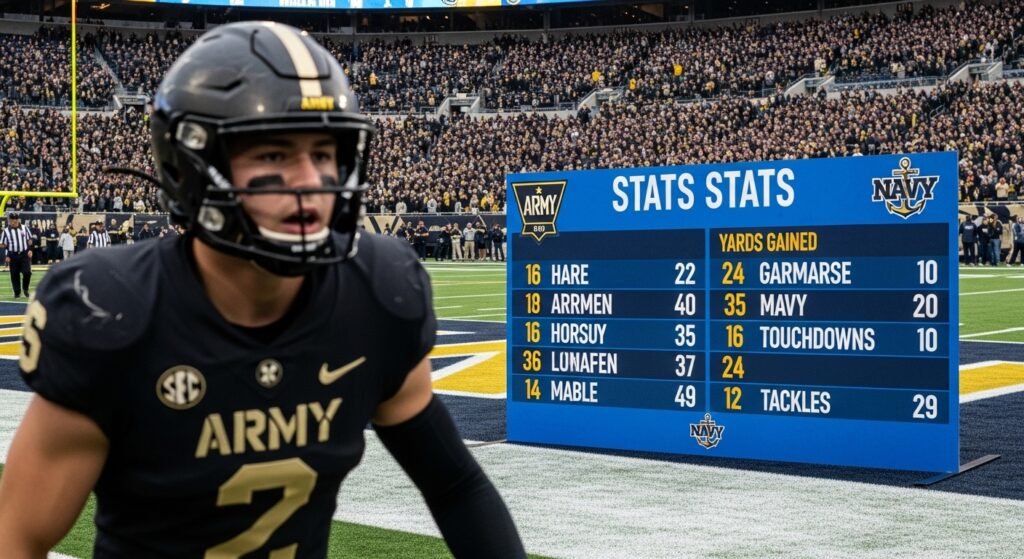
The triple-option offense defines both Army and Navy football, creating unique statistical profiles compared to traditional offenses. This run-heavy attack emphasizes ball control, physical line play, and disciplined execution on every snap. The army football vs navy midshipmen football match player stats showed rushing attempt totals that dwarfed passing attempts dramatically, reflecting both teams’ offensive philosophies.
Army’s rushing attack accumulated impressive yardage through sustained drives that controlled the clock and field position. Their yards-per-carry average reflected the effectiveness of their option execution and offensive line blocking against Navy’s defensive scheme. The distribution of carries among multiple ball carriers showed how the option spreads touches and keeps defenders from keying on any single player.
Navy’s rushing statistics told a similar story of commitment to the ground game and option fundamentals throughout four quarters. Their ability to gain chunk yardage on individual plays came from perfect option execution when Army’s defense made incorrect reads. The Midshipmen’s rushing touchdowns proved crucial, with goal-line situations often determining which team punched the ball across successfully.
Both teams featured quarterbacks who led their teams in rushing attempts, a statistical quirk unique to option offenses. These quarterback keepers came from designed runs and situations where keeping the ball became the correct decision. The minimal passing statistics from both teams reflected their offensive identities and comfort executing what they practice daily.
Yards after contact proved particularly important in this physical matchup, showing which team’s runners finished runs stronger. Both offenses emphasized falling forward and fighting for every yard, never surrendering easy tackles to defenders. The team that executed the triple-option more efficiently throughout the game typically gained significant advantages in possession time and scoring opportunities.
Defensive Battle Statistics
Defense proved absolutely crucial in this low-scoring, field-position battle between service academies emphasizing fundamentals. Both teams featured defenders who understood their responsibilities within schemes designed to stop option offenses. The army football vs navy midshipmen football match player stats revealed which defenders made plays consistently while maintaining gap integrity and assignment discipline.
Army’s defensive front controlled certain stretches, reading Navy’s option keys and making correct decisions to stop plays. Their defensive ends maintained outside contain responsibilities, preventing pitches from becoming explosive plays around the corner. The Black Knights’ linebackers flowed to the football, scraping over blocks and making tackles in pursuit throughout the contest.
Navy’s defense countered with their own disciplined performance, understanding that stopping the option requires everyone doing their job. Their defensive tackles plugged inside gaps, preventing fullback dives from gaining consistent yardage up the middle. The Midshipmen’s ability to limit big plays kept them in the game even when field position disadvantaged them.
Both teams emphasized gang tackling, with multiple defenders arriving at the ball carrier to prevent yards after contact. This team defensive approach reflected excellent coaching and individual discipline from players who understand option football. Tackles for loss proved particularly valuable, pushing offenses backward and creating difficult down-and-distance situations for their opponents.
Third-down stops became critical moments throughout this defensive struggle, with both teams needing to get opponents off the field. The defenses that executed better in these crucial situations gave their offenses more opportunities and better average field position. The defensive performances kept this game close, preventing either offense from establishing complete dominance for extended periods.
Special Teams Impact and Field Position
Special teams play proved absolutely crucial in this field-position battle where every yard mattered tremendously. Both teams featured solid kickers who converted field goal attempts when offenses stalled in opponent territory. Their accuracy provided crucial points in a low-scoring affair where every successful kick carried extra importance for momentum.
Punting dominated the statistical sheet, with field position battles significantly impacting offensive opportunities throughout the game. The army football vs navy midshipmen football match player stats showed net punting averages that revealed which team won the critical field position game. Punters who pinned opponents deep in their own territory created challenging situations that often determined drive outcomes.
Neither team featured explosive kick return specialists, but solid yardage on returns provided better starting field position occasionally. Both coaching staffs emphasized field position, often choosing to punt rather than risk turnovers on fourth-down attempts. Coverage units executed their assignments well, preventing long returns that could have shifted momentum dramatically in either direction.
Kickoff coverage proved crucial after scoring plays, with both teams wanting to pin opponents deep and force long-field situations. The discipline and speed both coverage units displayed prevented hidden yardage that accumulates through the game. Special teams coaching and execution often gets overlooked, but these plays significantly impacted this competitive service academy matchup.
Both teams avoided special teams turnovers like blocked punts or muffed catches that could have changed game outcomes completely. This clean execution reflected the discipline and attention to detail that military academies instill in their students. The field position battle won through special teams excellence often proves decisive in low-scoring games between these rivals.
Turnover Battle and Crucial Mistakes
Turnovers often determine outcomes in games where offensive production comes at a premium through grinding running games. The army football vs navy midshipmen football match player stats revealed the turnover margin that proved crucial to the final result and momentum shifts. Both teams generally protected the football well, understanding that mistakes could prove devastating against quality opponents.
Fumbles represented the primary turnover risk for option offenses that involve multiple ball exchanges on every play. The mesh point between quarterback and fullback, plus pitches to trailing backs, created opportunities for turnovers when execution faltered. Both teams emphasized ball security in practice, making fumble recoveries somewhat rare but extremely impactful when they occurred.
Interceptions remained unlikely given the minimal passing attempts from both offenses throughout the contest. When teams did attempt passes off play-action, defenders focused intensely on potential throws after seeing run after run. Each turnover significantly impacted field position and momentum, sometimes leading directly to points or scoring opportunities.
The team that won the turnover battle gained significant advantages through additional possessions and better average field position throughout the game. Creating extra opportunities while protecting the football proved crucial in this competitive rivalry matchup. Turnover margin frequently correlates with winning, and this game followed that established pattern clearly.
Both teams demonstrated the discipline and focus that military training instills, avoiding careless mistakes that hurt their chances. The attention to detail both programs emphasize showed through in their ball security and fundamental execution. These future military officers understood that individual mistakes affect the entire team, a lesson that applies beyond just football.
Coaching Excellence and Game Planning
Service academy football coaches face unique challenges preparing student-athletes who balance demanding academic and military requirements. Both coaching staffs demonstrated strategic brilliance throughout this matchup, maximizing their players’ abilities within their systems. The army football vs navy midshipmen football match player stats reflected coaching philosophies about ball control, defense, and special teams excellence.
Army’s head coach prepared his team for this rivalry game all season, knowing its importance to the academy and alumni. His commitment to the triple-option offense reflected confidence in his offensive line and running backs to execute fundamentals. The game plan emphasized physical line play and sustained drives that kept Navy’s offense off the field for extended periods.
Navy’s coaching staff countered with their own meticulous preparation, studying Army’s tendencies and preparing defensive adjustments. Their willingness to stay patient with their own triple-option attack showed confidence in their system and players. These coaches understand that winning this game requires discipline, execution, and avoiding self-inflicted mistakes more than trickery.
Both coaching staffs made excellent halftime adjustments, addressing weaknesses opponents exposed during first-half play successfully. Second-half performances often showed improvements as coaches tweaked blocking schemes and defensive alignments based on what they’d observed. Timeout management proved crucial, with coaches preserving timeouts for potential late-game situations requiring stops or scores.
The mutual respect between coaching staffs showed through their handshakes and interactions before and after the game. These coaches understand they’re preparing future military officers first, football players second, which provides important perspective beyond just wins and losses.
Historical Rivalry Significance
The Army-Navy rivalry represents the longest uninterrupted intersectional rivalry in college football history, dating back to 1890. These institutions have met annually for over 120 years, creating a tradition unlike any other in sports. Understanding this historical context adds tremendous depth and meaning to current matchups between these service academies.
Previous army football vs navy midshipmen football match player stats from past decades show how this rivalry has evolved through different eras and rule changes. Legendary coaches like Earl Blaik and Wayne Hardin built programs that established templates their successors still study today. The mutual respect between institutions runs deep, forged through years of competition and shared military values.
The series record has swung between periods of dominance for each academy, with recent years favoring Navy’s program. Legendary players have emerged from these games, using outstanding performances to launch distinguished military and sometimes professional football careers. The game has featured Heisman Trophy winners, future generals and admirals, and American heroes who served with distinction.
Presidential attendance at Army-Navy games reflects the national importance placed on this rivalry by our country’s leadership. The Commander-in-Chief traditionally attends, sitting with both student bodies during different halves to show equal support. This presidential presence elevates the game beyond typical college football into a celebration of American military service.
The traditions surrounding this game—from the march-on to the singing of alma maters—create unforgettable experiences for players and fans. These moments represent something larger than sports, honoring those who serve and have served our nation with courage.
Player Development and Future Service
The players who compete in Army-Navy games face unique paths compared to typical college football athletes. These young men balance demanding academic loads with military training while competing in Division I football at high levels. The army football vs navy midshipmen football match player stats represent achievements by student-athletes who will soon serve as military officers leading troops.
Physical development at service academies must balance football performance with military fitness requirements and standards. These players can’t simply focus on maximizing athletic performance—they must maintain overall military readiness too. The dedication required to excel in both areas speaks to their character and commitment to service above self.
Most Army and Navy players will not pursue professional football careers after graduation due to military service commitments. This reality creates a different motivation than playing for NFL contracts or personal glory alone. They play for their teammates, their academies, and the traditions they represent as future military officers.
The leadership skills developed through football translate directly to military service where these graduates will lead soldiers and sailors. The ability to perform under pressure, work as a team, and execute game plans mirrors military operations requiring similar qualities. Football becomes leadership training as much as athletic competition for these unique student-athletes.
The bonds formed through competing in this rivalry last lifelong, with Army and Navy graduates serving together throughout military careers. Former opponents become brothers in arms, united by their service to our nation despite their football rivalry. This perspective makes the Army-Navy game special beyond typical sports rivalries focused solely on winning.
National Significance and Tradition
The Army-Navy Game represents American military tradition and patriotism in ways no other sporting event can match. The pageantry, respect, and patriotic displays create an atmosphere that transcends sports into something deeply meaningful for our nation. Television broadcasts reach millions of Americans who may not watch other college football but tune in for this special tradition.
The pre-game festivities include military flyovers, parachute jumps, and ceremonies honoring veterans and active-duty service members. These moments remind everyone watching that these aren’t just college kids playing football—they’re future officers preparing to defend our country. The national anthem and military hymns take on special meaning when performed for these two student bodies.
The army football vs navy midshipmen football match player stats matter to alumni serving around the world who follow the game wherever they’re stationed. Service members deployed overseas find ways to watch or follow along, maintaining connection to their academies through this annual tradition. The game provides morale and connection to home for those serving far from family during the holidays.
The sportsmanship displayed by both teams sets an example for all of athletics and American society generally. Despite fierce competition, both teams show respect for opponents who will soon serve alongside them as military officers. After the game, both teams stand together singing each school’s alma mater, demonstrating unity despite the rivalry.
The game typically occurs in early December, providing Americans a moment to reflect on military service during the holiday season. This timing creates opportunities to honor veterans and active-duty service members while enjoying competitive football. The Army-Navy Game has become an American tradition that connects sports, military service, and patriotism uniquely.
Impact on Commander-in-Chief’s Trophy
The Commander-in-Chief’s Trophy goes to the service academy with the best record in head-to-head matchups among Army, Navy, and Air Force. This trophy adds extra significance to the Army-Navy Game beyond just bragging rights between the two oldest academies. The army football vs navy midshipmen football match player stats often determine which academy claims this prestigious trophy for the year.
The trophy, donated in 1972, represents excellence among the three major service academy football programs competing at the Division I level. Winning the Commander-in-Chief’s Trophy provides year-long bragging rights and becomes part of academy lore and tradition. The trophy resides at the winning academy until the next season’s games determine a new winner or defending champion.
Navy has dominated the Commander-in-Chief’s Trophy in recent years, creating motivation for Army and Air Force programs to close the gap. The round-robin competition among three service academies creates compelling storylines throughout each football season. Each game carries extra weight beyond just win-loss records or bowl eligibility considerations.
The presentation of the Commander-in-Chief’s Trophy involves ceremony and tradition befitting its military significance and competitive importance. The trophy features symbols from all three service branches, representing the unity and friendly competition among military services. Winning the trophy becomes a source of tremendous pride for the academy, team, and the entire military branch it represents.
The trophy competition encourages excellence among all three programs, pushing each academy to maintain competitive football programs despite unique challenges. This friendly rivalry among service academies benefits all three institutions while entertaining sports fans and military personnel nationwide.
FAQs
Where can I find detailed army football vs navy midshipmen football match player stats?
You can access comprehensive statistics on official Army and Navy athletic websites, ESPN, and College Football Reference. These platforms provide real-time updates during games plus detailed historical data dating back decades. Many sports apps offer live tracking specifically for this nationally-televised game each December.
What makes the Army-Navy game different from other rivalries?
The players are future military officers who will serve our country after graduation, adding significance beyond typical sports. The traditions, pageantry, and patriotic displays create an atmosphere unlike any other college football game. Both teams run similar triple-option offenses, creating a unique strategic matchup rarely seen in modern football today.
How does the triple-option offense work?
The triple-option gives the quarterback three choices on each play: give to the fullback, keep it himself, or pitch to a trailing back. The quarterback reads defensive reactions and makes split-second decisions based on what defenders do at the mesh point. This offense emphasizes deception, ball control, and physical line play rather than passing attacks.
Why do Army and Navy run the triple-option?
The triple-option maximizes the talent available at service academies where size restrictions limit recruiting compared to traditional programs. This offense emphasizes discipline, teamwork, and execution—values that align perfectly with military training and culture. The system also controls the clock, giving smaller teams chances against more talented opponents through possession.
Do any Army or Navy players go to the NFL?
Very few service academy players pursue NFL careers due to five-year active-duty service commitments after graduation required by all graduates. Occasionally, players receive permission to pursue professional opportunities while fulfilling reserve duties instead of active service. Most graduates prioritize military service over professional football, reflecting their commitment to serving our country first.
How can I watch the Army-Navy game?
The game airs nationally on CBS or other major networks in early December each year, usually on a Saturday. The game receives prominent coverage and convenient scheduling since it’s typically the only major college football game that day. Most streaming services that include CBS or major networks will carry the broadcast for viewers nationwide and internationally.
Conclusion
The Army-Navy rivalry transcends statistics and scoreboards, representing something fundamentally American and deeply meaningful. The army football vs navy midshipmen football match player stats tell stories about dedication, sacrifice, and excellence both on the field and in future military service. These numbers help us appreciate the incredible commitment these student-athletes make while preparing to defend our nation.
Whether you support the Black Knights or cheer for the Midshipmen, this rivalry reminds us what truly matters in sports and life. The mutual respect, sportsmanship, and shared values these young men display should inspire all Americans regardless of team allegiance. Understanding the statistics deepens our appreciation for their athletic achievements and the unique challenges they overcome daily.
Both academies continue developing not just football players but military leaders who will serve our country with distinction and honor. Future Army-Navy games will create new statistical stories and memorable moments worth celebrating together as Americans. The rivalry ensures both programs maintain competitive excellence while preparing graduates for military service to our nation.