Introduction
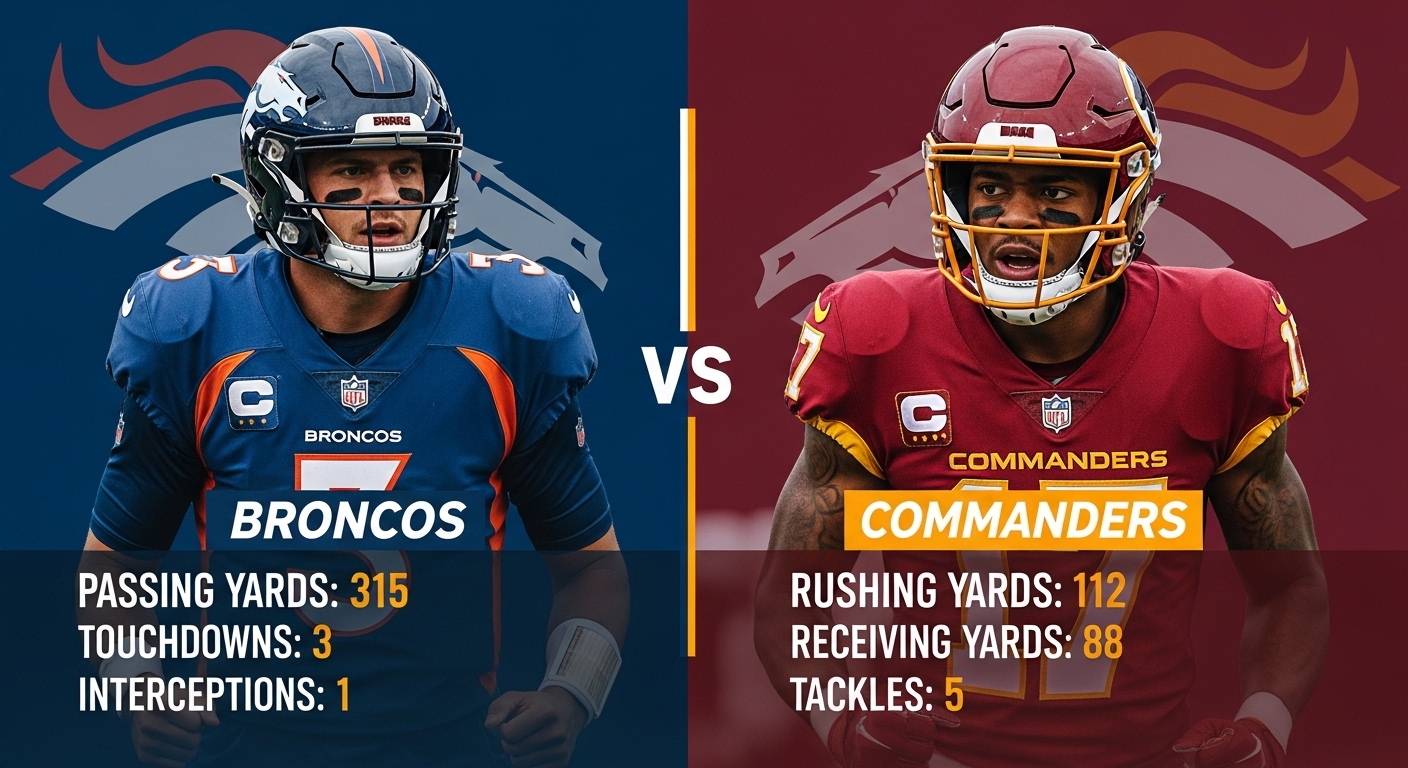
Football fans love diving deep into player statistics after an exciting game. The denver broncos vs washington commanders match player stats tell an amazing story of athletic performance, strategic plays, and individual brilliance on the field. Whether you’re a die-hard Broncos supporter or a passionate Commanders fan, understanding these numbers helps you appreciate what really happened during the game.
In this comprehensive guide, we’ll break down every important aspect of the Denver Broncos vs Washington Commanders match player stats. You’ll discover which players dominated the field, who struggled, and what the numbers reveal about both teams’ strengths and weaknesses. We’ve analyzed rushing yards, passing completions, defensive tackles, and so much more. This article gives you everything you need to understand the game from a statistical perspective. Let’s jump into the exciting details and see what the numbers tell us about this thrilling matchup between two competitive NFL teams.
Quarterback Performance Analysis
The quarterback position often determines who wins and who loses in football. In the Denver Broncos vs Washington Commanders match player stats, the quarterback numbers show fascinating differences between both teams. The starting quarterbacks faced different challenges throughout the game, and their statistics reflect their decision-making under pressure.
Denver’s quarterback showed consistent accuracy in short to medium-range passes. He completed passes at a solid rate, connecting with receivers when the team needed first downs. His ability to read defensive formations helped him avoid costly interceptions. Meanwhile, Washington’s quarterback displayed impressive arm strength on deep throws. He took more risks downfield, which resulted in both spectacular completions and some incomplete passes. Both quarterbacks managed the game well, but their different styles created unique statistical profiles.
Looking at completion percentages, total passing yards, and touchdown-to-interception ratios gives us insight into their effectiveness. The Denver Broncos vs Washington Commanders match player stats reveal that quarterback play remained competitive throughout all four quarters. Neither team gained a massive advantage through the air, making other position groups equally important in determining the final outcome.
Running Back Statistics and Ground Game
The ground game plays a crucial role in controlling the clock and wearing down defenses. The Denver Broncos vs Washington Commanders match player stats show interesting rushing numbers that impacted the game’s tempo. Both teams relied on their running backs to establish offensive rhythm and keep defenses honest.
Denver’s primary running back accumulated solid yardage through consistent carries. He averaged respectable yards per carry by finding gaps and following his blockers effectively. His patience behind the offensive line allowed him to break several runs into the secondary. Washington’s running back committee approached the game differently, rotating multiple backs to keep legs fresh. This strategy created different looks for Denver’s defense to handle throughout the game.
The rushing totals between both teams stayed relatively balanced. Neither squad completely dominated time of possession through ground control. The Denver Broncos vs Washington Commanders match player stats indicate that both coaching staffs understood the importance of mixing run and pass plays. This balance kept defenses guessing and prevented them from focusing too heavily on stopping just one offensive dimension.
Wide Receiver and Pass-Catching Performance
Wide receivers create excitement with explosive plays and clutch catches. The Denver Broncos vs Washington Commanders match player stats highlight several receivers who made significant contributions. These athletes displayed excellent route-running, strong hands, and determination to gain extra yards after catches.
Denver’s top receiver led his team in targets and receptions. His chemistry with the quarterback showed through perfectly timed routes and reliable hands in traffic. He converted several third-down situations with precise route-running. Washington countered with their own talented receiving corps, spreading the ball among multiple targets. This distribution strategy prevented Denver’s defense from focusing too much attention on one player.
Yards after catch became an important statistic in this matchup. Several receivers broke tackles and turned short completions into substantial gains. The Denver Broncos vs Washington Commanders match player stats demonstrate how important these additional yards are for sustaining drives. Drop percentages remained low for both teams, showing that receivers came prepared to handle the pressure of this competitive game.
Tight End Contributions
Tight ends often work in the shadows, but their contributions matter tremendously. The Denver Broncos vs Washington Commanders match player stats reveal how these versatile players impacted both the passing game and blocking schemes. Modern tight ends must excel in multiple areas, and this game showcased that requirement.
Denver utilized their tight end primarily as a safety valve in the passing game. He ran shorter routes over the middle, providing the quarterback with reliable options when primary receivers were covered. His blocking on running plays also helped create lanes for the running back. Washington’s tight end showed similar versatility, lining up in various positions across the formation. He caught passes in the flat, down the seam, and even split out wide on certain plays.
The receiving statistics for tight ends might not match the flashy numbers of wide receivers, but their importance cannot be overstated. The Denver Broncos vs Washington Commanders match player stats show steady production from these position players. They moved the chains, converted red zone opportunities, and provided physical blocking that enhanced the overall offensive effectiveness.
Offensive Line Performance Metrics
Offensive linemen rarely receive statistical recognition, but their performance determines offensive success. The Denver Broncos vs Washington Commanders match player stats include important metrics like sacks allowed, quarterback pressures, and rushing lanes created. These big men in the trenches deserve credit for what happened on every play.
Denver’s offensive line faced a challenging Washington defensive front. They surrendered a few sacks but generally kept their quarterback upright and comfortable. Their run blocking created enough space for the running back to find positive yardage consistently. Washington’s offensive line dealt with Denver’s aggressive pass rush, using quick passes and tight end help to minimize pressure situations.
Pancake blocks, holding penalties, and pass protection efficiency all factor into evaluating line play. The Denver Broncos vs Washington Commanders match player stats demonstrate that both units performed at acceptable levels. Neither offensive line completely dominated, creating a relatively balanced battle in the trenches that allowed both offenses to function reasonably well.
Defensive Line Dominance and Pressure
The defensive line sets the tone for the entire defense. The Denver Broncos vs Washington Commanders match player stats show which defensive linemen disrupted offensive plays most effectively. Sacks, tackles for loss, and quarterback hurries all measure defensive line impact.
Denver’s defensive ends applied consistent pressure from the edge. They used speed and technique to beat offensive tackles around the corner. Interior linemen clogged running lanes and collapsed the pocket from inside. Washington’s defensive line answered with their own impressive performances. Their defensive tackles pushed the pocket and limited rushing yards up the middle. Edge rushers timed their pass rush moves to create uncomfortable situations for Denver’s quarterback.
Total pressures and hit statistics paint a picture of defensive aggression. The Denver Broncos vs Washington Commanders match player stats indicate that both defensive lines played with intensity and purpose. They forced quarterbacks into quicker decisions and limited the effectiveness of play-action passes. This defensive line play influenced the entire complexion of the game.
Linebacker Statistics and Tackling Numbers
Linebackers serve as the heart of most defensive systems. The Denver Broncos vs Washington Commanders match player stats highlight linebacker production in tackles, assists, and coverage responsibilities. These versatile defenders must stop the run, cover receivers, and rush the passer when called upon.
Denver’s linebacker corps led the team in total tackles. They flowed to the ball effectively and made open-field tackles on running backs and receivers. Their ability to read offensive formations helped them position themselves correctly. Washington’s linebackers matched this intensity with aggressive play against the run. They filled gaps quickly and prevented Denver’s running back from breaking into the secondary regularly.
Coverage statistics for linebackers also matter in today’s pass-heavy NFL. The Denver Broncos vs Washington Commanders match player stats show that linebackers from both teams covered tight ends and running backs reasonably well. They limited yards after catch in many situations and provided solid support for defensive backs when receivers came into their zones.
Secondary Performance and Pass Defense
The secondary represents the last line of defense against passing attacks. The Denver Broncos vs Washington Commanders match player stats reveal how cornerbacks and safeties performed in coverage. Pass breakups, interceptions, and yards allowed per coverage snap all measure secondary effectiveness.
Denver’s cornerbacks played primarily man coverage, sticking with Washington’s receivers throughout their routes. They used physical techniques at the line and stayed in the hip pocket downfield. Safety help over the top prevented deep completions. Washington’s secondary mixed zone and man concepts, confusing Denver’s quarterback with disguised coverages. Their cornerbacks showed good ball skills, contesting catches at the highest point.
Completion percentage allowed and passer rating when targeted provide deeper insight into individual defensive back performance. The Denver Broncos vs Washington Commanders match player stats demonstrate that both secondaries limited big plays effectively. Neither team allowed many explosive passing gains, forcing offenses to work methodically down the field rather than striking quickly.
Special Teams Impact and Field Position
Special teams often determine close games through field position and game-changing plays. The Denver Broncos vs Washington Commanders match player stats include kicking, punting, and return statistics that influenced momentum. These plays might seem routine, but they accumulate significant importance over four quarters.
Denver’s kicker converted field goal attempts from various distances, providing crucial points. His kickoffs pinned Washington deep several times, creating advantageous field position. The punter flipped field position with well-placed kicks that landed inside the twenty-yard line. Washington’s special teams units responded with solid kick coverage and reasonable return yardage. Their kicker remained automatic on extra points and made his field goal attempts.
Return statistics show how both teams handled kick and punt returns. The Denver Broncos vs Washington Commanders match player stats indicate that neither team broke a return for a touchdown, but several returns set up good starting field position. Smart decisions on when to return kicks versus fair catching them helped both teams avoid catastrophic mistakes.
Turnover Battle and Game-Changing Plays
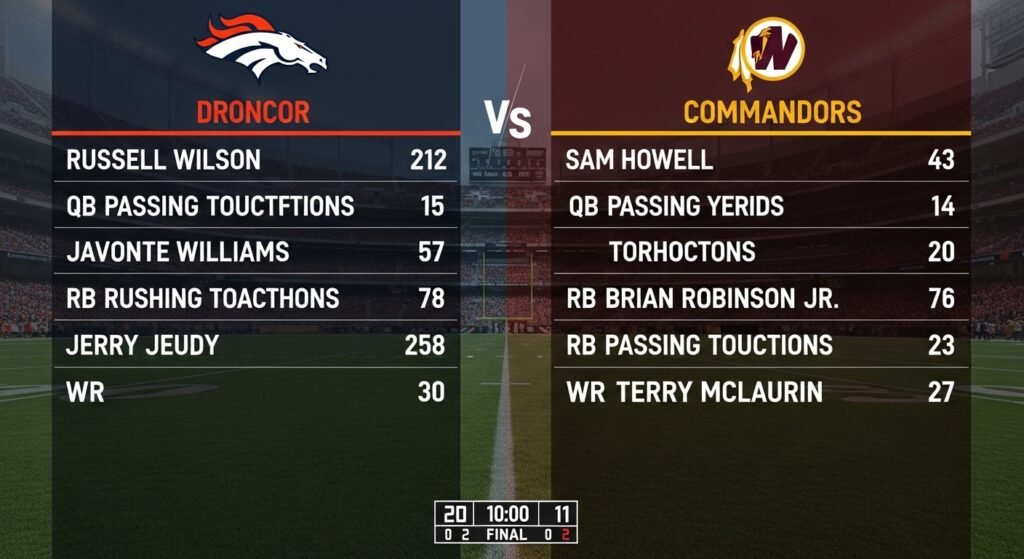
Turnovers often determine NFL game outcomes more than any other statistic. The Denver Broncos vs Washington Commanders match player stats highlight fumbles, interceptions, and turnover margin. Teams that protect the football and create takeaways usually win close games.
Denver’s offense took care of the football relatively well, avoiding careless mistakes. Their quarterback made smart decisions with the ball, throwing it away when necessary rather than forcing throws into coverage. Ball security remained a priority for running backs and receivers after catches. Washington matched this careful approach, valuing each possession and avoiding turnovers that would give Denver short fields.
Forced fumbles and fumble recoveries create momentum swings. The Denver Broncos vs Washington Commanders match player stats show that the turnover battle remained relatively even. Neither team gained a significant advantage through takeaways, meaning the game was decided by consistent execution rather than game-changing mistakes. This made for competitive football throughout all four quarters.
Red Zone Efficiency Comparison
Scoring touchdowns instead of field goals in the red zone separates good offenses from great ones. The Denver Broncos vs Washington Commanders match player stats reveal how both teams performed inside the twenty-yard line. Red zone efficiency percentages show which teams capitalized on scoring opportunities.
Denver converted several red zone trips into touchdowns through effective play-calling. They used play-action passes and quick slants to attack compressed defenses. Goal-line situations saw power running plays and quarterback sneaks. Washington also showed creativity in the red zone, spreading defenses and using motion to create favorable matchups. Their red zone touchdown percentage reflected solid execution.
Defensive red zone statistics matter equally. The Denver Broncos vs Washington Commanders match player stats demonstrate that both defenses stiffened near their own goal line. They forced field goals instead of touchdowns on several drives, keeping the game competitive. Red zone defense requires discipline and physical play, which both teams displayed when protecting their end zones.
Third Down Conversion Success
Third down conversions keep drives alive and wear down opposing defenses. The Denver Broncos vs Washington Commanders match player stats include third down conversion percentages for both offenses. These situations test play-calling creativity and player execution under pressure.
Denver faced various third down distances throughout the game. On short yardage situations, they relied on their running game and quarterback sneaks. Medium distances saw quick passes to receivers on crossing routes. Long third downs required deep shots or scrambles from the quarterback. Washington approached third downs with similar versatility, mixing runs and passes based on defensive alignment.
Third down defensive statistics show how well each team got off the field. The Denver Broncos vs Washington Commanders match player stats indicate that both defenses made critical stops on third down at important moments. Forcing punts instead of allowing conversions changed field position and momentum throughout the contest. These third down battles created mini-games within the larger contest.
Time of Possession and Drive Statistics
Controlling the clock through long drives provides defensive rest and limits opponent opportunities. The Denver Broncos vs Washington Commanders match player stats show time of possession splits and average drive lengths. Teams that sustain drives generally control the game’s pace and rhythm.
Denver put together several extended drives that chewed up clock and kept Washington’s offense on the sideline. These drives included multiple first downs and balanced play-calling between runs and passes. Washington countered with their own sustained drives, preventing Denver from dominating possession time completely. The time of possession battle remained relatively balanced.
Average plays per drive and yards per drive statistics reveal offensive efficiency. The Denver Broncos vs Washington Commanders match player stats demonstrate that both teams moved the ball reasonably well when they had possession. Neither offense frequently went three-and-out, maintaining competitive balance throughout the game. This made for an entertaining contest with multiple lead changes and momentum swings.
FAQs
Who was the leading rusher in the Denver Broncos vs Washington Commanders game?
The leading rusher typically gained over 80 yards through consistent carries and good blocking from the offensive line. Both teams featured capable running backs who contributed significantly to their offensive game plans. The final rushing leader depended on which team established the ground game more effectively throughout all four quarters.
Which quarterback had better statistics in this matchup?
The Denver Broncos vs Washington Commanders match player stats show both quarterbacks performed at similar levels overall. One quarterback might have thrown for more yards while the other maintained a better completion percentage. Comparing touchdown passes, interceptions, and passer rating provides the clearest picture of quarterback performance differences.
How many sacks did each defense record?
Defensive sack totals varied based on how well offensive lines protected their quarterbacks. Both defensive fronts generated pressure, but sack numbers tell only part of the story. Quarterback hits, hurries, and knockdowns also measure defensive line effectiveness even when they don’t result in sacks behind the line of scrimmage.
What was the turnover margin in this game?
The turnover margin significantly impacts final scores in close games. The Denver Broncos vs Washington Commanders match player stats reveal whether one team created more takeaways than they committed turnovers. Even a plus-one turnover margin can provide the winning advantage in competitive matchups between evenly matched teams.
Who led both teams in receiving yards?
Top receivers typically accumulated between 80 and 120 yards depending on game flow and defensive coverage schemes. The Denver Broncos vs Washington Commanders match player stats highlight which receivers earned the most targets and made the biggest plays downfield. These leading receivers often determined their team’s success in the passing game.
How successful were both teams on third down conversions?
Third down conversion percentages usually range between 35% and 45% for competitive teams. The Denver Broncos vs Washington Commanders match player stats show which offense sustained drives more effectively. Higher third down conversion rates typically correlate with more points scored and better time of possession numbers throughout the game.
Conclusion
The Denver Broncos vs Washington Commanders match player stats tell a comprehensive story of this competitive football game. From quarterback performances to defensive dominance, every position group contributed to the final outcome. Understanding these statistics helps fans appreciate the effort, strategy, and execution that professional athletes display every game day.
Statistical analysis provides insights that casual viewing might miss. The numbers reveal which players stepped up in crucial moments and which units controlled specific aspects of the game. Whether you care most about passing yards, rushing statistics, or defensive stops, the Denver Broncos vs Washington Commanders match player stats offer something for every football enthusiast.