Introduction
Golf is often all about the total number of strokes — but not always. In golf match play, players compete hole by hole instead of counting every stroke for the full round. It changes the way the game feels, how you plan your shots, and how players win.
So, what exactly is match play? Think of it like this: instead of a race to the lowest total score, it’s like a game of mini-battles. You win each hole by beating your opponent’s score, and whoever wins the most holes — wins the match.
In this guide, we’ll break down golf match play in simple, friendly language. We’ll cover the rules, how it works, and strategies real golfers use to win. Whether you’re just learning the game, a junior golfer, or an adult trying match play for the first time, there’s something here for you.
Let’s explore why golf match play is such an exciting twist on the classic game of golf.
What Is Golf Match Play?
Golf match play is a type of scoring format where two golfers (or two teams) compete hole by hole. The player who takes the fewest strokes on a given hole wins that hole.
Winning a hole earns you 1 point. If both players or teams tie a hole, it’s called halved, and no point is awarded. The match continues until one player is “up” more holes than there are holes left to play.
It sounds different from the usual game — and it is! In regular stroke play, every shot counts toward your total score. But in match play, bad holes don’t hurt as much. If you have a terrible hole, you only lose that one hole — not the entire round.
That’s what makes golf match play fun, fast-paced, and often a lot more competitive.
Match Play vs. Stroke Play: What’s the Difference?
In stroke play, every shot matters. You count how many shots it takes to finish all 18 holes, and the player with the lowest total score wins.
In match play, you’re only concerned with what happens on each hole. Winning a single hole is more important than your total number of strokes. You could shoot higher overall but still win the match!
Here’s a quick comparison:
| Stroke Play | Match Play |
|---|---|
| Total score over 18 holes | Win more holes than opponent |
| Every shot counts | Only care about each hole |
| Common in tournaments | Used in Ryder Cup, club games |
| Slow to recover from mistakes | One bad hole = just one lost hole |
Understanding how these formats work will improve your golf knowledge and help you decide which style of play is right for you.
How Does Match Play Scoring Work?
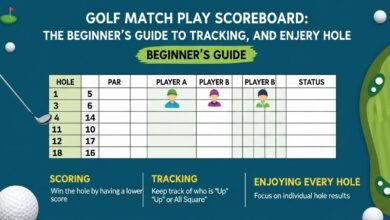
Match play scoring is easy once you understand the basics. Here’s how it goes:
- You and your opponent play each hole.
- Whoever takes fewer strokes wins the hole and goes “1-up.”
- If you both tie the hole, the score doesn’t change — it’s “halved.”
- If your opponent wins a hole, you’re now “1-down.”
- The match continues until you’re up by more holes than there are holes left to play.
For example:
- If you’re 3 up with 2 holes left, you win the match “3 and 2.”
- If you’re tied after 18 holes, many matches go to sudden death.
This format keeps the game exciting. One great hole can flip the momentum — fast!
Golf Match Play Terms You Should Know
Before you head to the course, here are some key match play terms:
- Up/Down: If you win a hole, you’re “1-up.” If you’re losing, you’re “1-down.”
- Halve: If both players tie a hole, that hole is halved.
- Dormie: You’re dormie when you’re up by the same number of holes left. Your opponent must win the rest to tie.
- All Square: The match is tied. No one is up.
- Concede: A player allows the opponent to take the hole or putt without playing it.
These words help tell the story of the match as it unfolds, and they’re great to learn for both beginners and experienced golfers.
Strategy Tips for Golf Match Play
Since match play is not about total strokes, your golf strategy changes. Here are some smart things to keep in mind:
1. Play the player, not the course.
Think about your opponent’s mistakes — not just your own score. If they’re out of bounds, play it safe. You don’t need birdie — just better than them!
2. Take more risks when behind.
If you’re down by a few holes, try aggressive shots to win the hole. Match play rewards smart risks.
3. Don’t give up.
One bad hole is not a disaster. You can come back quickly in match play. New hole = new chance.
4. Use your mental game.
Small mind games — like quick playing, long pauses, or confident putting — can rattle opponents (but always play fair!).
These tips help you win more matches — even if you’re not the best golfer on the course.
When Is Golf Match Play Used?
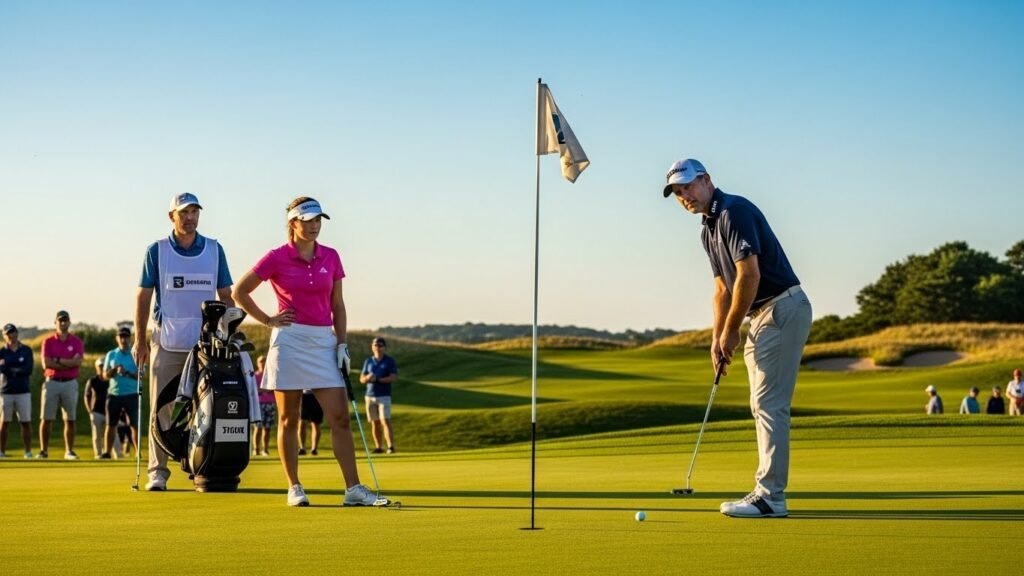
Though most pro tournaments use stroke play, match play is popular in team events, club play, and college tournament formats.
Famous examples include:
- Ryder Cup: USA vs. Europe in team match play. Huge excitement!
- Presidents Cup: USA vs. rest of the world (Minus Europe).
- WGC Match Play Championship: Top pros face off in a knockout bracket-style match format.
- Local golf clubs: Many club tournaments and summer leagues love match play because it’s fair and fun.
Even friends use match play for casual rounds. It’s easier to track and gives everyone a shot at winning — even if you have one bad hole.
Can Match Play Be Played as a Team Format?
Yes! Golf match play works great with teams, and it makes it more fun.
Here are a few team match play formats:
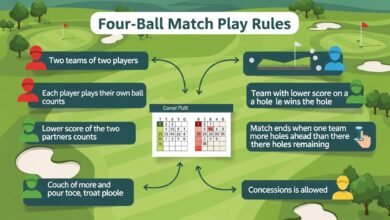
- Four-ball: Each player plays their own ball. Best score on each team wins the hole.
- Foursomes: Two teammates alternate shots on one ball. Team with lowest score wins the hole.
- Skins Matches (Modified Match Play): Each hole has a point (or dollar) value. Win the hole, win the “skin.”
All of these formats are used often in pro team events, charity scrambles, or weekend hangouts with friends.
Using the golf match play format for teams brings out fun teamwork, communication, and some good-natured pressure.
How Handicaps Work in Match Play
Yes, handicaps are used in match play — especially when players of different levels compete. It makes the game fair.
Here’s how it works:
If Player A is a 10-handicap and Player B is a 15-handicap, Player B gets 5 strokes extra — across the 5 hardest holes.
On those holes, if Player B scores one more than Player A, the hole is halved, not lost. It levels the playing field and keeps matches close.
Most scorecards label the hole difficulty from 1 (hardest) to 18 (easiest). That helps you know where you get strokes.
So if you want fair competition, just ask your golf partner, “What’s your handicap?” and adjust the match play scoring accordingly.
How to Win a Golf Match Play Game
You’ve got the rules, the mindset, and the setup. Now here are a few simple ideas on how to win your next match play duel:
- Start strong. Get early momentum to take pressure off later.
- Putt with confidence. Many holes are won or lost on short putts.
- Think defensively. Concede putts smartly and protect your lead.
- Control your pace. Fast play can rattle slower opponents; slower play may unsettle fast ones.
- Be ready to adapt. Your opponent may change tactics — match that change with smart judgment.
Remember, you’re not just playing the course — you’re competing with one person at a time.
Golf match play is as much about mental strength and smart decisions as it is about skills with clubs.
Pros and Cons of Golf Match Play
Here’s a quick breakdown of the advantages and disadvantages of golf match play:
✅ Pros:
- Comebacks are possible — one bad hole doesn’t ruin your round.
- Simpler when playing 1-on-1.
- Encourages aggressive play styles.
- More emotional — every hole feels like a battle.
❌ Cons:
- Not great for big tournaments with over 100 players.
- Easy to confuse newer players without scorecards.
- Ending early (if one player wins before 18 holes) can feel too fast.
So if you like the idea of winning small battles to win the war, match play is your format!
Match Play Golf Etiquette: Play Fair and Have Fun
Just like in stroke play, golf etiquette matters in match play. Here are some simple reminders:
- Don’t celebrate too loudly after winning a hole.
- Be clear with rules, like if a putt is given or not.
- Don’t distract opponents during their swing.
- Know when to concede a hole or a shot. It’s a smart way to move the game along.
- Always shake hands after the match — it’s a sign of good sportsmanship.
Following these tips creates a fair atmosphere and helps others enjoy the game too.
FAQs
1. What does “2 and 1” mean in match play scoring?
“2 and 1” means a player was 2 holes ahead with only 1 hole left — so the match ends early.
2. Is every match play game 18 holes?
Not always. Some friendly matches are 9-hole games, and some pro matches use 36 holes in finals.
3. Can you still tie in match play?
Yes! If both players win the same number of holes, it’s “all square.” You can decide to go to sudden death or call it a tie.
4. What does it mean to concede a putt?
If a putt is really short, a player may say, “That’s good.” That means you don’t have to hit it; it’s counted as made.
5. What if both players hit out of bounds?
Follow normal rules. Replay from the tee if needed. Whoever gets the ball in the hole first wins — or it’s halved.
6. Can match play work with more than 2 golfers?
Yes! You can play team match play, skins, or rotate opponents over 9 or 18 holes. Just have fun with it.
Conclusion
If you’ve only ever played stroke play, trying golf in a match play format is like discovering a whole new game. It’s exciting, fast, and full of strategy. Every hole becomes a fresh battle. Every shot matters in a different way.
By understanding golf match play rules, scoring, and smart strategies, you can enjoy friendlier competition or even win more weekend rounds.
Whether you’re at a local club or just trying something new with friends, golf match play brings the kind of fun that keeps you coming back for more.