Utah Jazz vs Phoenix Suns Match Player Stats – Full Game Breakdown, Top Performers, and Takeaways

Introduction
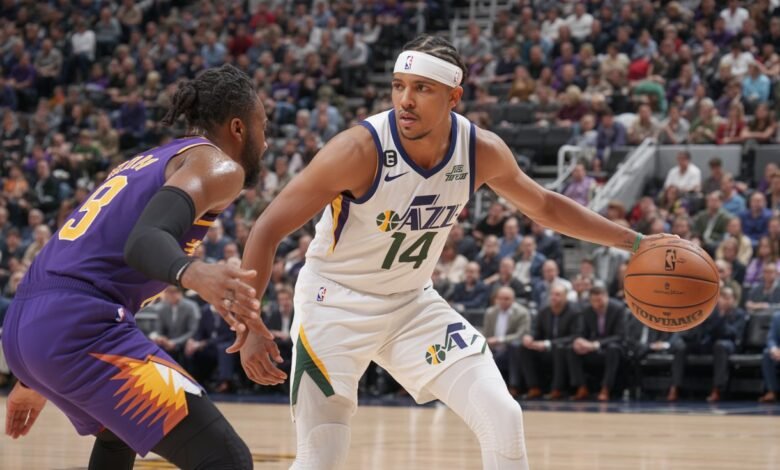
The Western Conference always promises exciting basketball, but few matchups are as fun and fast-paced as the utah jazz vs phoenix suns match player stats. These two teams bring different energy to every game. The Suns have star firepower with names like Kevin Durant, Devin Booker, and Bradley Beal, while the Jazz rely on a balanced squad with hard workers like Lauri Markkanen, Jordan Clarkson, and Walker Kessler.
But what really makes this game fun to study is the Utah Jazz vs Phoenix Suns match player stats. These numbers show who stepped up, who took over, and what really made the difference on both ends of the floor.
This isn’t your typical stat recap. We’re digging deeper, breaking it down in easy words, fun insights, and powerful takeaways — whether you’re a fan, a coach, or simply curious about how basketball works. Let’s explore what really happened, by the numbers and through the plays.
Why the Utah Jazz vs Phoenix Suns Game Was One to Watch
This wasn’t just an ordinary matchup — it felt like a playoff battle. The Utah Jazz came in with grit and hustle. The Phoenix Suns arrived with talent and experience. The mix made for a high-scoring, exciting contest full of fast breaks, buzzer-beaters, big dunks, and crunch-time action.
The Suns needed this win to stay strong in a crowded playoff race. The Jazz were playing to prove they can compete with top teams. Every possession mattered.
That’s why the Utah Jazz vs Phoenix Suns match player stats are so important. They don’t just count numbers — they tell the story of who showed up when it mattered and how the game unfolded minute by minute.
Kevin Durant Goes Off with a Masterclass in Scoring
When Kevin Durant is locked in, there’s just not much a defense can do. In this game, KD put on a clinic.
Durant finished with 37 points, shooting above 60% from the field. He knocked down tough mid-range jumpers, nailed a few three-pointers, and got to the free-throw line often. He also added 6 rebounds and 4 assists, showing his all-around game.
In the third quarter, he took over completely — scoring 15 points in that stretch alone. Every shot seemed effortless, even with defenders all over him.
Looking at the match player stats, Durant’s scoring efficiency stood out. He wasn’t just scoring — he was doing it smoothly and smartly. That helped the Suns keep their lead each time Utah made a push.
Lauri Markkanen Powers the Jazz with a Big Double-Double
On the Utah side, Lauri Markkanen proved again why he’s the leader of this young Jazz team.
Markkanen finished with 28 points and 11 rebounds, earning a strong double-double. He hit tough shots from all over the floor, including 4 three-pointers, and fought hard on the glass.
His size made it tough for Suns defenders to close out without fouling. And his ability to space the floor let other Jazz players drive to the basket.
The Utah Jazz vs Phoenix Suns match player stats highlight how valuable he was. Lauri kept the Jazz close, especially in the fourth quarter, when he scored 10 straight to cut into the Suns’ lead.
Devin Booker’s Quiet But Smart Game
Surprisingly, Devin Booker didn’t lead all scorers in this game — but don’t let that fool you. He played a smart, controlled game that still had strong impact.
Booker ended with 22 points, 7 assists, and 5 rebounds. He didn’t force shots. Instead, he found teammates like Durant and Beal in better positions and made great decisions under pressure.
This calm maturity is seen in the match player stats. Booker shot efficiently and made winning plays — even if it wasn’t his stats on the front page. His passing and off-ball movement helped the Suns keep good spacing and energy throughout the game.
Jordan Clarkson Adds Fire Off the Jazz Bench
Anytime the Jazz need points off the bench, they call on Jordan Clarkson — and he answered in style once again.
Clarkson poured in 20 points in just 24 minutes, adding 4 rebounds and 3 assists. He hit a few deep jumpers and got crafty with his floaters and drives in the paint. His scoring helped swing momentum at the start of the second quarter when Utah was down by 10.
In the Utah Jazz vs Phoenix Suns match player stats, Clarkson’s per-minute production was among the best. He’s the energy burst the Jazz depend on when the offense starts to slow down.
Bradley Beal Steps In with Balanced Scoring
In a team full of scorers, Bradley Beal found his rhythm as a steady contributor. He finished with 19 points, 5 assists, and 4 rebounds.
Beal hit open shots when needed and made clutch baskets late in the fourth quarter when Utah crept within four. He wasn’t flashy, but he was efficient, scoring on catch-and-shoots, fast breaks, and simple pick-and-roll actions.
If you go through the match player stats, Beal’s line may not scream “star game,” but anyone watching knew how important his moments were down the stretch.
Walker Kessler Owns the Paint for Utah
Walker Kessler, Utah’s big man, once again made a name for himself with his elite rim protection.
He only scored 8 points, but grabbed 12 rebounds and blocked 3 shots. Most importantly, he altered at least five more shots that don’t show in the box score. That presence forced Phoenix to take tougher floaters or kick the ball back out.
The Utah Jazz vs Phoenix Suns match player stats show his low scoring number, but defensive stats like blocks and rebounding matter just as much — especially against a scoring-heavy team like the Suns.
Bench Scoring: The Suns’ X-Factor
While Utah got a big lift from Clarkson, Phoenix had help too. Eric Gordon came off the bench and drilled 3 three-pointers, scoring 13 points in just 18 minutes.
His ability to hit open looks helped the Suns keep pace with Utah’s younger, faster second unit. Without his scoring in the second quarter, the Jazz could have taken control early.
This is where reading the match player stats really helps. It’s easy to miss role players, but their efficient minutes are often what swings a game.
Stat Battle: Shooting Percentages and Efficiency
When looking at who played better, sometimes the cleanest clue is field goal percentage. The Suns shot 51% from the floor, while the Jazz finished at 46%.
Three-point shooting was even tighter — Suns shot 38%, Jazz shot 37%. But when you look closer, Phoenix hit more in the final 6 minutes, making their shooting stats more impactful timing-wise.
Efficiency shows up in other areas too — free throws. Phoenix shot 85%, while Utah made just 73% of their attempts. That 12% gap matters in close games.
Once again, this is where the Utah Jazz vs Phoenix Suns match player stats provide insight. It’s not just how many shots you take, but when you make them.
Turnovers and Transition Points
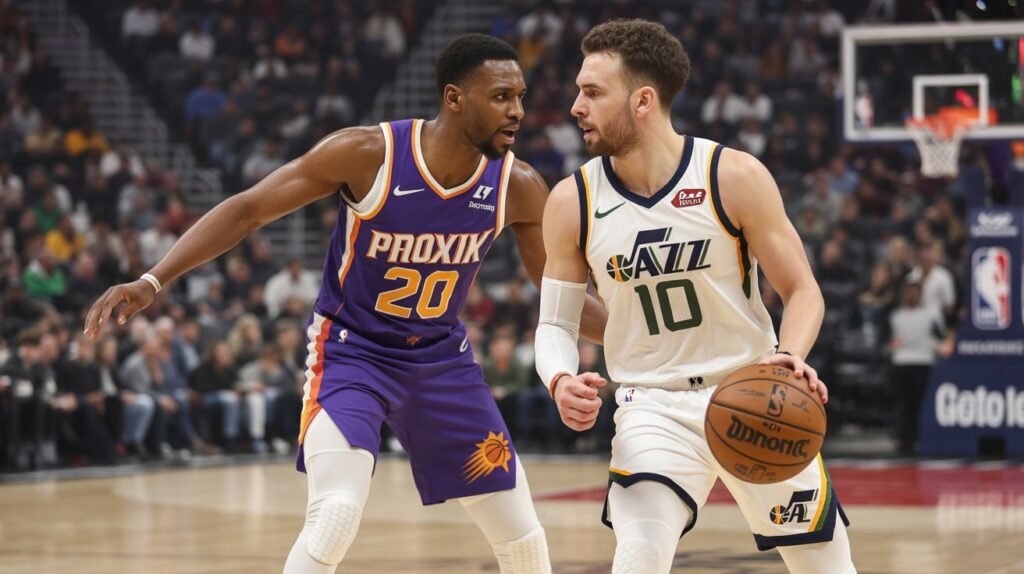
Sometimes, the biggest turning point in a game appears in places people forget to look: turnovers.
The Jazz had 16 turnovers, while Phoenix kept theirs to 11. That led to 15 fast-break points for the Suns — compared to Utah’s 8. Those quick points are gold in tight games.
Bad passes during pressure moments hurt Utah, especially when Phoenix defenders like Durant and Okogie used active hands and long arms to intercept or contest passes.
This is why analyzing match stats matters. Turnovers often flip a game in less than 10 seconds — and Phoenix made sure to take advantage.
Rebounding Battle: Who Won in the Paint?
You might think the taller team always wins the rebound war, but not always. In this game, it was close.
Utah actually grabbed 50 rebounds, while Phoenix had 47. On the offensive glass, both teams had 12 second-chance opportunities. The difference? Phoenix turned their offensive boards into 14 points, while Utah only got 10 points from theirs.
That’s another subtle area highlighted in the Utah Jazz vs Phoenix Suns match player stats. Rebounding isn’t just grabbing the ball — it’s what you do with it next.
Fast Breaks and Pace of Play
Utah came out attacking in transition early, thanks to Clarkson and rookie Keyonte George. They scored 14 fast break points, much of it in the first half.
But Phoenix responded late with their own fast-push style, scoring 15 fast break points overall, led by Booker and Durant sprinting down the floor after missed Jazz shots.
While both teams played fast, the Suns had better spacing and lane filling in transition. The stat sheet confirms this, backing up the eye test.
FAQs
1. Who was the top scorer of the game?
Kevin Durant led all players with 37 points, showing elite shooting and leadership.
2. Did any player have a double-double?
Yes, both Lauri Markkanen (28 points, 11 rebounds) and Walker Kessler (12 rebounds, 3 blocks) earned solid double-figure stats.
3. Who made the most three-pointers?
Jordan Clarkson and Kevin Durant both hit multiple threes; Durant had 4, while Clarkson hit 3.
4. Which team had more assists?
The Suns shared the ball better, with 27 team assists, compared to the Jazz’s 20.
5. How many points did the benches score?
Utah’s bench scored 35 points, led by Clarkson. The Suns’ bench added 28 points, with Gordon chipping in 13.
6. What stat made the biggest difference?
Turnovers. Utah had 16, while the Suns only had 11. That led to fast-break scoring and momentum shifts.
Conclusion
The final score might show who won, but diving into the Utah Jazz vs Phoenix Suns match player stats tells the full story. From Durant’s dominance to Clarkson’s energy, to rebounding, assists, and turnovers — every stat added a piece to the puzzle.
When you look closely at the numbers, you see hustle plays, smart decisions, and key moments that changed the game. Phoenix showed they could close out under pressure. Utah proved they can hang with elite teams — and even take over parts of the game.
Next time you watch an NBA game, don’t stop at the highlights. Pull up the player stats. They’ll show you the heart of the game.